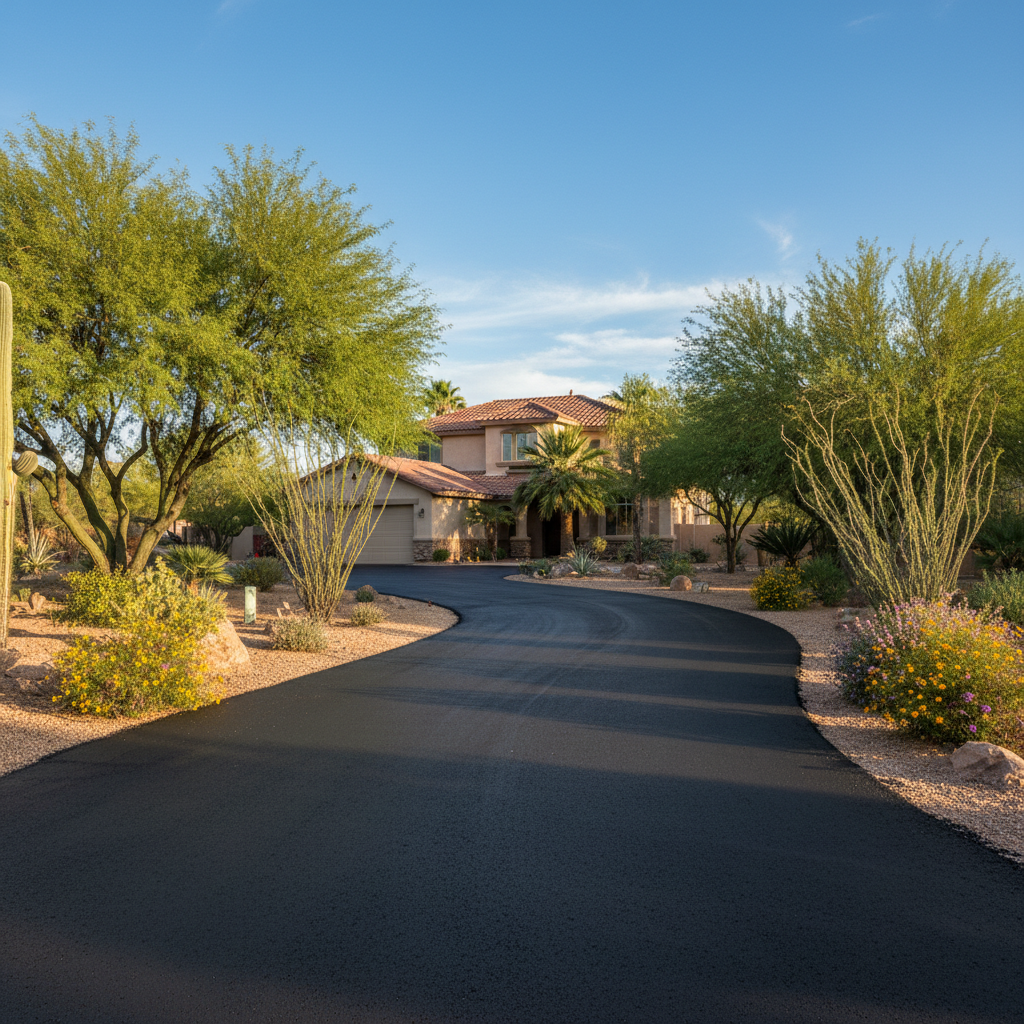
Desert heat and dry spells take a serious toll on Asphalt Paving surfaces around the Valley. If you live out near the Cooper Road corridor or down in Sun Groves, you have probably watched your driveway turn gray, brittle, and dusty under the relentless sun. That is where a proper Slurry Coat comes into play. Chandler Asphalt Paving gets a lot of questions about when it is actually safe to lay down this protective treatment without risking a botched job.
Understanding the Desert Climate Factor
Our local climate dictates every single move we make with liquid asphalt and aggregate mixes. Unlike cooler regions where you worry about morning frosts, our main battle here is extreme thermal stress and rapid evaporation. When the asphalt surface temperature shoots past 140 degrees in July, any water-based emulsion you throw down will flash-cure before it can properly bind. The mix breaks down instantly inside the spreader box, leaving you with a rough, crumbly mess that starts peeling within months.
That means timing is everything. You have to work around the extremes. The ideal window for getting a Slurry Coat down usually falls during the shoulder seasons, which are late fall through early spring, when daytime highs sit comfortably in the 70s and 80s. During these months, the emulsion cures at a steady pace, allowing the polymer-modified binders to lock the aggregate securely in place.
How Weather Conditions Dictate the Schedule
- Daytime air and surface temperatures must stay consistently above 50 degrees during application and overnight curing.
- Monsoon humidity in July and August can trap moisture in the mix, ruining the cure even if it does not rain.
- High winds kick up desert dust that contaminates the wet seal before it sets, destroying the bond.
If a sudden dust storm rolls through or a rare winter storm drops overnight temperatures too low, we have to halt operations. Rushing a slurry application just to hit a calendar date is a waste of your hard-earned money.
Protecting Your Pavement Year-Round
Once you have got a fresh, deep-black Slurry Coat curing nicely on your property, you need a basic maintenance routine to make it last. Do not park heavy delivery trucks or RVs on fresh asphalt during the first week of peak heat because softened binder needs time to fully polymerize. Keep oil drips and chemical spills cleaned up quickly, because petroleum breaks down asphalt binders fast. By keeping up with minor crack sealing before the summer heat hits, you will stretch the lifespan of your pavement and keep your property looking sharp for years.