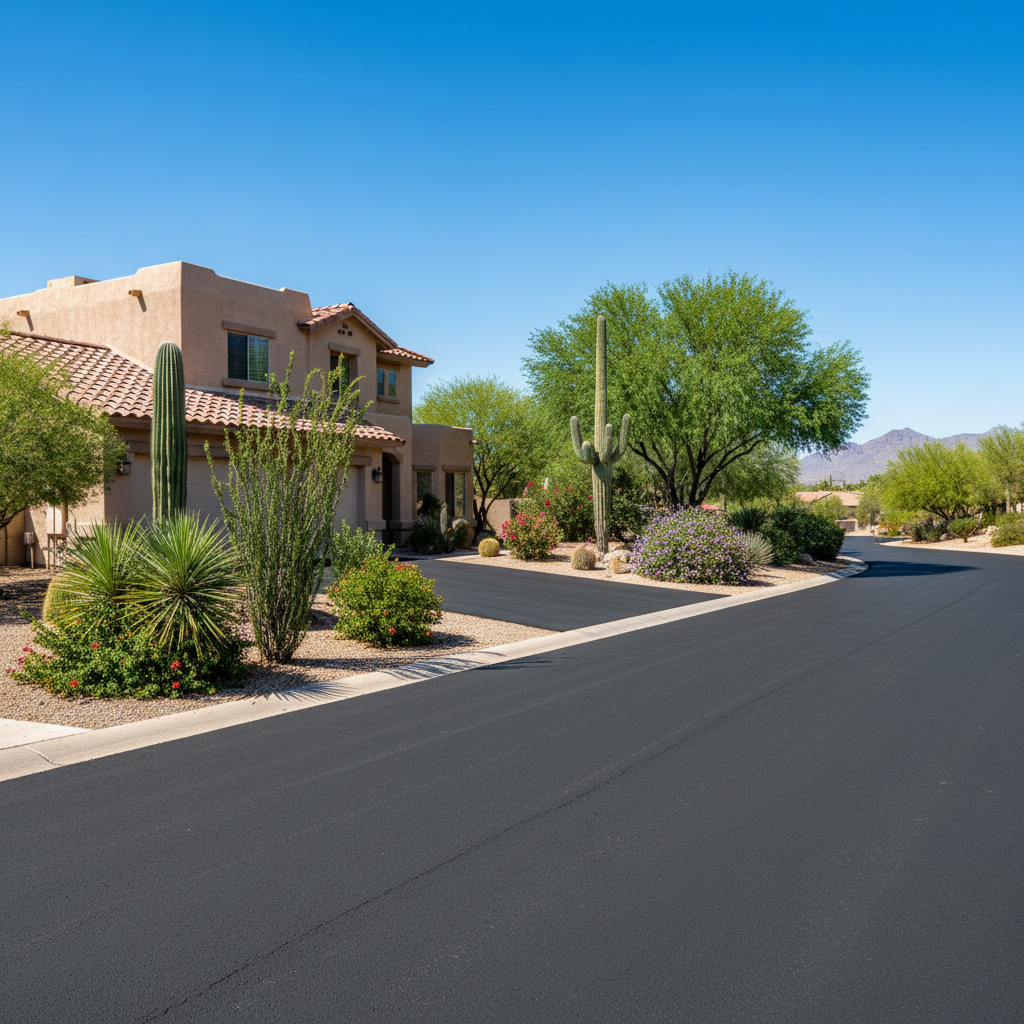
Alright, let's talk about commercial asphalt here in Chandler. If you own a business, you know your parking lot or access roads aren't just pavement; they're part of your first impression. And keeping that impression solid, literally, means understanding our crazy Arizona weather. It's not like paving up north, that's for sure.
Why Chandler's Climate Changes Everything for Asphalt
You've seen it. Those scorching summers where the asphalt gets so hot you could probably cook an egg on it. Then we get the monsoon rains, sometimes a flash flood that just rips through things. This isn't just uncomfortable; it's brutal on asphalt. The extreme temperature swings cause expansion and contraction, leading to cracks. The intense UV rays break down the binder, making the surface brittle. And those heavy rains? They find every tiny crack and start eroding the base underneath.
We're not just dealing with heat; we're dealing with a specific kind of heat. Think about the soil we have here, often caliche-heavy. It affects drainage and how the ground moves, which in turn impacts your asphalt's foundation. You've got to factor all that in when you're planning any major work.
When's the Best Time to Schedule Commercial Asphalt Work?
This is probably the biggest question I get. For major paving projects, like laying down a brand new parking lot or a complete overlay, you're looking for moderate temperatures. That means avoiding the dead of summer and the few weeks of winter where it actually gets chilly enough to matter. My sweet spot? Fall and spring.
- Fall (October to December): The temperatures are cooling down nicely, but the ground's still warm enough for proper compaction and curing. You're past the worst of the monsoons, generally, and the days are still long enough for good production.
- Spring (March to May): Similar to fall, you've got comfortable temperatures that aren't too hot or too cold. The asphalt mix cures well, and you're usually ahead of the really intense summer heat.
Now, for smaller repairs like patching potholes or crack filling, you've got a bit more flexibility. We can often do those year-round, as long as the surface is dry and the temperatures aren't extreme. But for something that needs to last and look good, timing is key.
Weather Conditions That Affect the Job
It's not just the season; it's the day-to-day weather. Here's what we're always watching:
- Temperature: Asphalt needs to be laid and compacted within a specific temperature range. Too hot, and it can cool too slowly, leading to issues. Too cold, and it cools too fast, making it hard to compact properly and achieve the right density. We're talking about the air temp and the ground temp.
- Rain: You can't pave on a wet surface. Period. Moisture prevents proper bonding and compaction. If rain is in the forecast, we'll reschedule. Even a light drizzle can mess things up.
- Wind: High winds can cool the asphalt mix too quickly, especially on larger projects. It also blows dust and debris, which isn't ideal for a clean surface.
- Humidity: While not as critical as temperature or rain, very high humidity can sometimes affect the curing process of certain sealants or coatings.
We're always checking the forecast multiple times a day when we've got a job scheduled. It's just part of doing business right here at Chandler Asphalt Paving.
Protecting Your Commercial Asphalt Investment Year-Round
You've spent good money on your asphalt, so you want it to last. Here's how you keep it in top shape:
- Regular Inspections: Walk your lot once a month. Look for new cracks, potholes, or areas where water is pooling. Catching small issues early saves you big money down the line.
- Crack Sealing: This is huge. Once a crack forms, water gets in, and it's game over for your sub-base. Seal those cracks as soon as you see them. It's like putting a band-aid on a cut before it gets infected.
- Sealcoating: Think of it as sunscreen for your asphalt. It protects against UV rays, water penetration, and oxidation. For commercial properties, I usually recommend sealcoating every 2-4 years, depending on traffic and the condition of the pavement. It really extends the life of your lot, especially with our intense sun.
- Drainage Management: Make sure your drainage systems are clear and working. Standing water is asphalt's worst enemy. Clear out those storm drains and make sure water isn't pooling anywhere.
- Prompt Repairs: Don't let a small pothole turn into a crater. Patching is much cheaper than replacing sections of your lot.
- Keep it Clean: Regular sweeping removes debris that can hold moisture or cause wear. Oil and gas spills should be cleaned up quickly too, as they can degrade the asphalt binder.
Taking a proactive approach to your commercial asphalt maintenance in Chandler isn't just about aesthetics; it's about protecting your property's value and ensuring safety for your customers and employees. It's an investment that pays off when you do it right and keep our unique desert environment in mind.